 March
26
March
26
Tags
Radium Girls – Theatre draws history close.
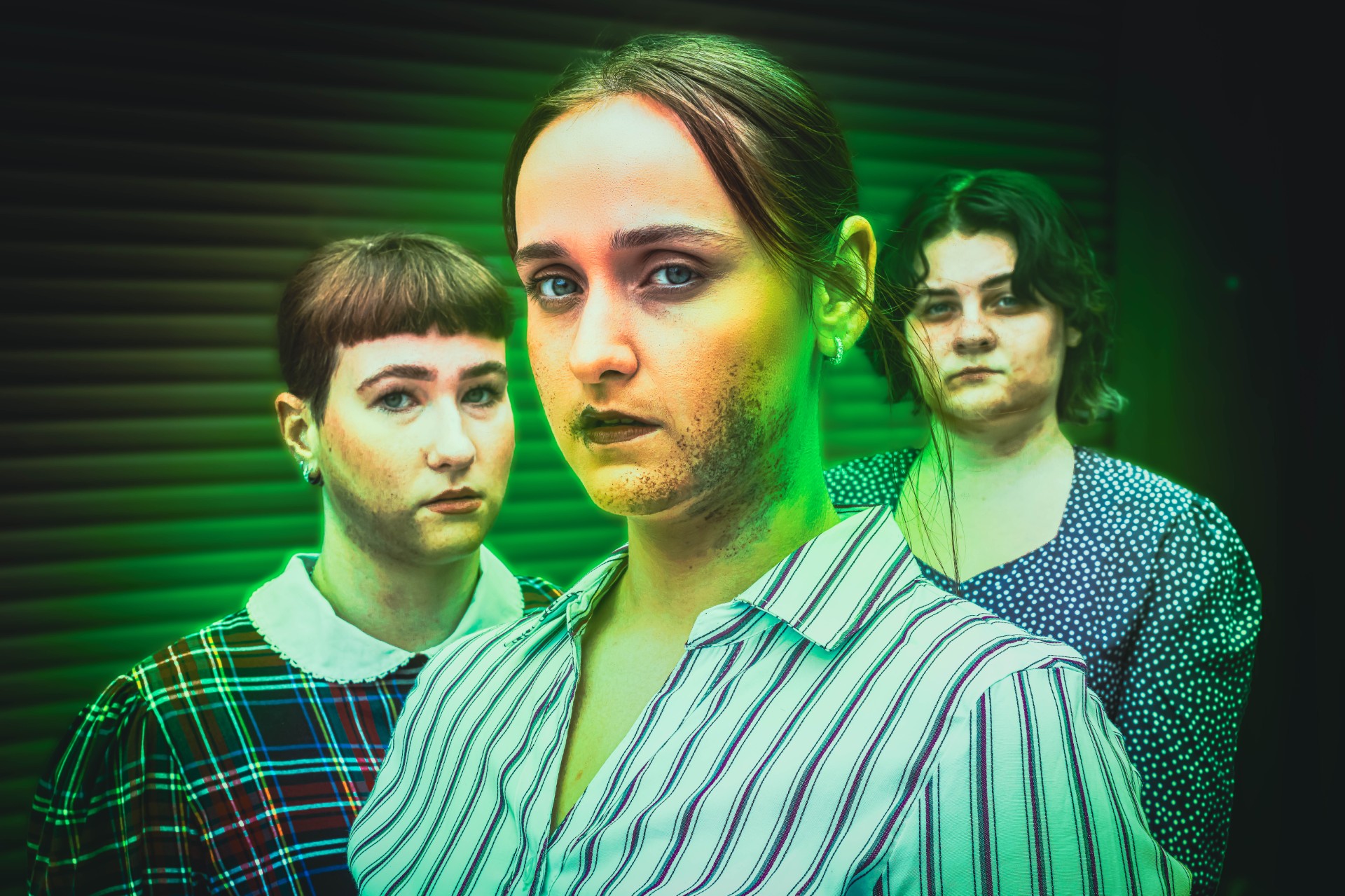
Radium Girls – Red Tree Theatre 20-28 March (Images by Benjamin Hudson)
Wyong Drama Group – You can grab your tickets here.
Musical theatre may fill seats, but a region comes into its own when it claims a more confident and sophisticated artistic identity—one that gives equal weight to drama. Such a voice is forged through sustained dialogue between artists and audiences, as the influence of fame recedes and the reflex of cultural cringe falls away.
A quiet renaissance is underway, as theatre on the Central Coast grows in nuance, ambition, and artistic confidence.
Radium Girls, presented by the Wyong Drama Group, offers a striking example of this shift. Through its exploration of workers’ rights, the necessity of hearing women’s voices, and the ethical responsibilities embedded within any workplace, the production speaks to values that resonate deeply within Australian culture. These themes gain their greatest force in a local context, where they are not abstract but shared. The decision by Red Tree Theatre to champion such work reflects a growing confidence in the role of drama within the region’s cultural life.
In his director’s notes, Daryl Kirkness recognises the power of an experienced crew, describing it as a production ‘dream team.’ Supported by production manager Anna Carter, he delivers a cohesive work in which diverse elements are unified with clarity and assurance.
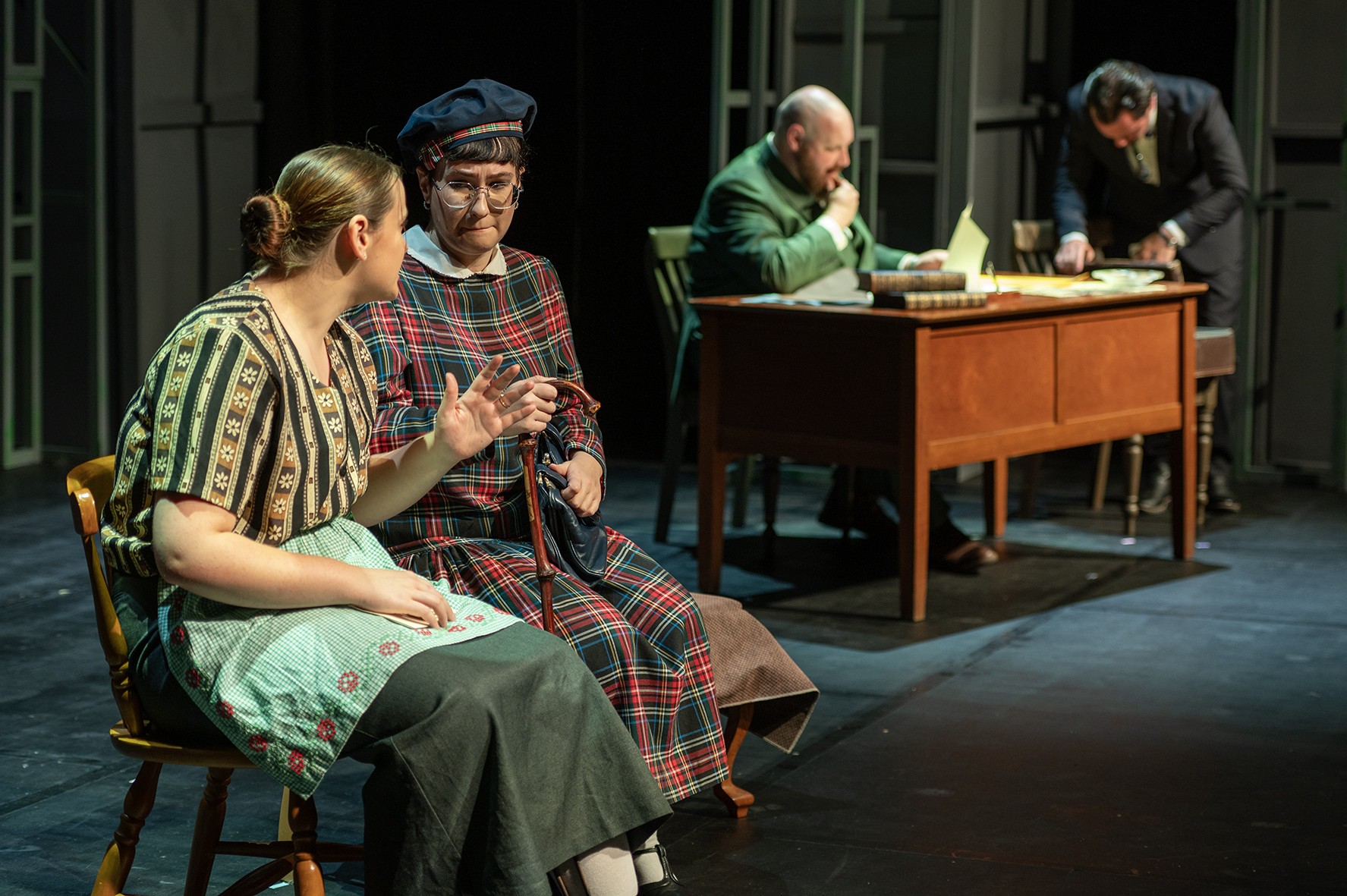
A giant clock dominates the stage, its hands at times moving frighteningly fast, at others unnervingly slow. Across its face, Ben Hudson’s projected graphics seep in toxic green. This visual is underscored by Clayton Williamson’s chilling soundscape and Cameron Mitchell’s stark lighting, together establishing the hazardous environment these women inhabit. Scene changes are executed with deft precision by Amber Markham, whose efficiency provides a strong structural foundation. Andrew Worboys’ score is crushing in its intensity, at times assuming the presence of a character in its own right. This is further supported by Debbi Clarke’s costumes, Ian Abbott’s set construction, and the assistance of Sharyn Hutchinson and Jacquie Pirina, with Raylene Woodland’s technical operation rounding out an accomplished and cohesive production team.
Daryl Kirkness describes the auditions as ‘incredible,’ and the resulting cast offers compelling evidence of the Central Coast’s theatrical maturity. The supporting ensemble—each performer fully inhabiting their role—deliver confident, well-judged performances that highlight the depth of local talent. Tina Findlay, Billy Crick, Sarah Brown and Bear Phoenix anchor the production with energy and precision, forming a vital foundation for its success.
In a production weighted with pain, Samara Dawson and Jake Cain-Roser—most notably as the voice of the press—introduce moments of warmth that feel like air breaking through. We are allowed, briefly, to breathe. That breath becomes hope when Jacob Ramm and Fleur Ramm appear as Raymond Perry and Katherine Wiley, their presence offering light without diminishing the darkness around it. The world of the play is further enriched by Liago Brown, Margaret Holdom, Lynn McMullen and Steve Van Tongeren, whose generous and fluid performances across multiple roles lend the production both texture and depth.
Rhiannon Power and Yasmin Ling bring a quiet intensity to the horrors of the ‘lip, dip and paint’ technique that anchors the production. As the women at the threshold of the story, they carry the first intimations of decay—voices that feel at once living and already lost. Their performances lend the work its initial gravity, shaping the emotional landscape upon which Courtney-Jade Buckley builds her commanding portrayal of Grace Fryer. Together, these women form the moral and dramatic centre of the piece. In their hands, the play becomes more than historical retelling; it becomes a meditation on how power inscribes itself upon the body, and how theatre, in turn, restores voice to those history has attempted to silence. What emerges is a story that moves beyond its time, speaking to a universal pattern of exploitation that refuses to remain contained by era or culture.
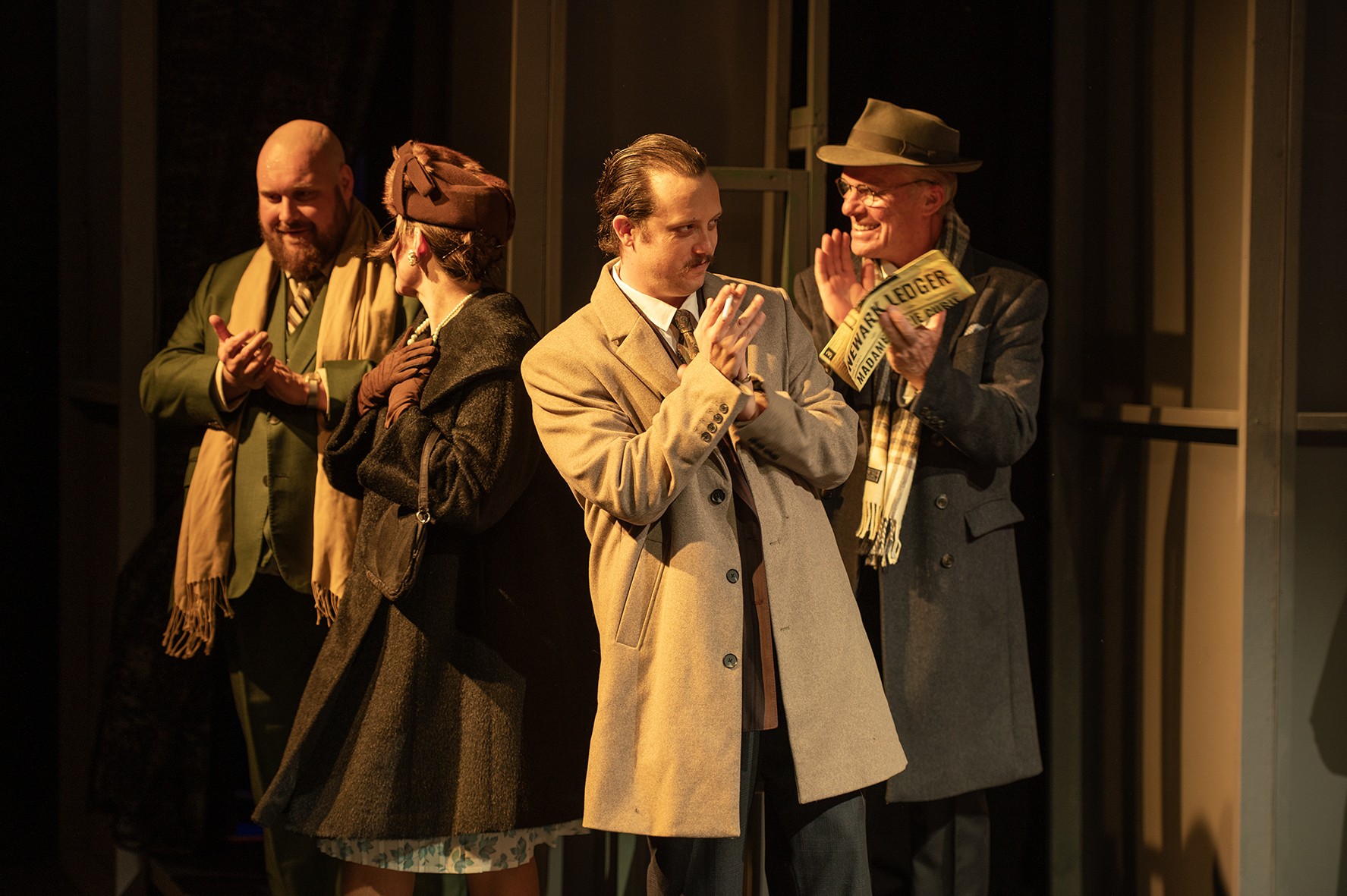
This interplay between the universal and the local is brought sharply into focus in Raif Colbert Smith’s portrayal of Arthur Roeder. He renders the role with a measured complexity befitting a man capable of such decisions—neither caricature nor excuse, but something more unsettling. He is flanked by his ‘shoulder devils,’ Ruben Harris as Charlie Lee and Marc Caldwell as Edward Markley. While Caldwell moves seamlessly across multiple roles, it is his Markley who delivers the production’s most brutal blows. Together, these figures embody the competing ideologies that transform a workplace into a site of harm—where power, profit, and denial are inscribed upon the bodies of the women who suffer them. Andy Kabanoff’s Sabin von Sochocky is equally compelling: a composed and chilling presence, the man who ushered radium into the American medical industry with consequences the play refuses to let us forget.
What emerges from this production is not simply a retelling of a historical injustice, but a reaffirmation of theatre’s role within a community. Here, on the Central Coast, we see a form stepping into its own—confident enough to confront difficult truths, and generous enough to hold them in shared space. In doing so, this production does more than tell a story; it strengthens the cultural voice of the region itself, reminding us that the most powerful theatre does not distance us from history, but draws it closer—until it speaks, unmistakably, to us.
 Lisa Thatcher