 May
30
May
30
Tags
Maleficent – Female power and the complete failure of critical analysis. (Film Review)
This review will include spoilers, which means I can’t post it on IMDB or most other places, but I can’t speak frankly about the problems of the films critique without spoilers, so I’m going with the spoilers. Be warned.
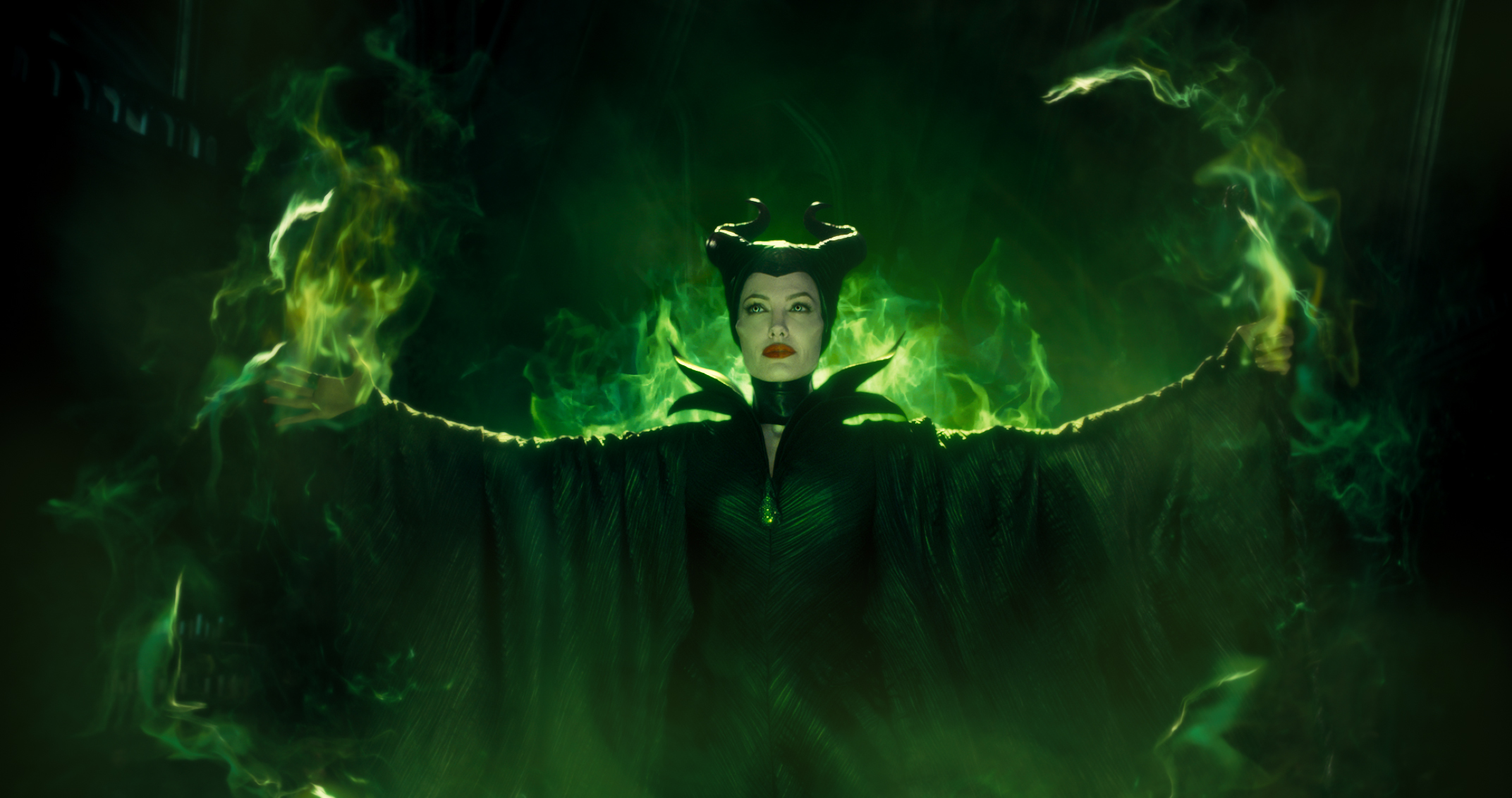
Without any doubt, the most astonishing thing about the film Maleficent is the appalling inability of contemporary critics to accurately review and critique the film. Surely, if there is a problem with the relationship between females and film, then critics need to become aware of the part they play in that relationship, how to recognise it, and how to examine it. This goes far beyond a films ability to pass the Bechdel test, or our abilities to catoegorise films as “girl power” or “feminist”. It includes the applause of ineptitude when it is masculine and the refusal of greatness when it is feminine, and the way all of us – film makers and critics alike – are keeping the film medium conservative and worst of all, profoundly dull. In reading the early reviews over the last few days of Maleficent, I have been horrified to see its ratings on the Rotten Tomatoes aggregator reducing hour by hour, primarily due to completely inaccurate judgements about “rape metaphors” and Maleficent’s character being little more than a jealous woman, who is scorned by her lover – neither of which feature. When Maleficent curses the young Aurora to a hell where she has to wait for “true love’s kiss” it is a male fantasy to imagine failure of love at the core. It is loss of freedom, not a selfish lover that has cursed Maleficent. It is not the lost kiss she laments, and anyone who thinks this is a rape metaphor is trapped in the grandeur and unyeilding power of the phallus – none of this is in Maleficent. Here is the spoiler that, apparently, even the critics who have seen the film didn’t pick up: Maleficent has her wings removed, and that is the source of her anger and revenge. It is the removal of her power. It is no small thing to say I have been shocked by the irrepressible drive of critics to turn this film into something about jilted love – or unbelievably, genital mutilation – when it never even touches on it – it is simply that she trusts a man, and feels “something” never defined, who then slices off her wings. The wings are all she ever refers to, she never claims to have loved Stefan, but there is a relentless drive in critics to redefine this lucid metaphor as insipid and weak, using a plot line that never appears in the film.

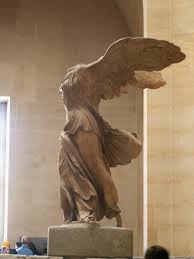
Winged Victory of Samothrace or Nike of Samothrace.
Maleficent doesn’t have a rape metaphor, and if anyone knew even the slightest thing about ancient Greek mythology, they would recognise the Goddess Nike leading her battalions, a remarkably progressive notion of female power and a stunning evocation of the Winged Victory of Samothrace. Angelina Jolie is worthy of an academy award for her portrayal of one of the most progressive female characters I have ever seen in film, and I can’t think of another actress with the beauty, talent, screen presence and incredible intelligence it takes to produce such a performance. The scene of her pain and humiliation is shocking and desperately sad. Most of all, I am astounded that this film has come from the Disney studios. It goes way past Frozen, past Thelma and Louise, past all previous incarnations of the powerful female that Jolie herself has brought to the screen, and that one of my most loathed companies (primarily because of the horrible way they portray females) has come up with the goods so clearly, so beautifully and so fearlessly has truly surprised me. I always expected to be “wowed” by Maleficent, its production values, and fine cast, and that stunning Lana del Rey song, but I had no idea I was in for something so progressively in touch with a post feminist image of power, and so ahead of its time. Yes there is one particular thematic repetition from Frozen, but this is not the problem it is touted to be, and I ask you honestly, when has this kind of thing been a problem for male oriented super hero films?

Maleficent is the story of feminism rising from its ashes of revenge, reclaiming its viciously hacked off wings, and flying to the sun in a way that Icarus could only dream of. It is the story of woman going through feminist paces – first beauty, then innocence, then affection leading to the death of power, disbelief, anger, revenge, rage, withdrawal, sadness, self-awareness, inner peace, the battle for the self and finally – something we don’t quite have yet – victory. The Victory of Nike, more properly evoked in the earlier battle scenes, when Maleficent flies through the field of battle to lead her troops to victory.
She is also the dramatic representation of the guardian angel, reduced to the dueling shoulder angels, the battle of the self with the self as one fights to unite the people around, out of love and harmony versus the right to assert personal control and satisfaction, even if it means the suffering of some. Maleficent is a refusal of the post enlightenment reliance on rationalism in the place of theology – she is an entirely new breed of creature, one who operates not from an essential inner realisation of a fundamental truth, but as a creature bent on the inclusion of every kind of difference. She has no cause but to defend her right to live and those she loves to live, but this never translates into a fetished nationalism. She is not moral, she is wise, and she wants no suffering to come to anyone, for no reason other than the obvious: witnessing the pain in others is horrible. In this, she is more advanced than most humans alive today. Disney has not just debunked the mythology of the evil Queen, as they did in Frozen. Here they have rewritten her history – they have included the flaws that make her perfect, and they have built a human we barely recognise, nor know what to do with. Maleficent has a history, but in a positively Nietzsche meets Foucault meets Butler transformation, they have given us a human that is genuinely the evolution of ourselves for no other reason than we choose to evolve. Maleficent’s incredible victory flight at the end of the film (spoiler) is the flight of victor who has one the battle against themselves, it is the perfect realisation of transformation and evolution by our own intended design.
Sleeping Beauty is a very old tale, originally written in 1697 by Charles Perrault, then revived around 1812 by the Brothers Grimm, two scholars of local folklore. Maleficent the character was an addition to the original story, made in the 1959 Disney version. To suggest, as some critics have, that this story didn’t need to be re written is baffling, because the biggest theme of the film (spoiler alert) the removal of Maleficent’s wings, is the very reason the story had to be retold. Maleficent then reacts with anger and aggression upon another female she sees as privileged, and if you think this is unrealistic, you should speak to the few women who have survived dowry murder attempts at the hand of their mother-in-law, as I have, to see what women will do to each other when their own power has been stripped away. To right the social wrongs that have festered in the wake of all the tellings of the Sleeping Beauty myth (for it is true to say this story has now reached that stage), Robert Stromberg and Linda Woolverton have reached back in time to the ancient Greeks, and the mythology between the 8th century BC to around 600 AD that transformed all the cultures touched by the Sleeping Beauty story. In an age when we are drowning in an ocean of mediocre comic films, inspired by the reading material of privileged white pre-teen American males from the 1940’s forward, constantly touted as relevant when they are poorly concieved sausage fests, it is invigorating to evoke imagery that is hundreds, and thousands of years old that touches all Western culture. As much as I am so grateful to Linda Woolverton and Robert Stromberg and Disney for having the courage to make this beautiful, remarkable film, I’m not sure that I trust them to have come up with such nuances, and therefore I make the assertion that this film has Angelina Jolie written all over it, and she had to have a hand in all the script re-writes and the use of metaphor in the film. There is a potent female mind behind Maleficent, and it is a glorious thing to behold.

Maleficent is a game changer for me. Disney, a company I felt contributed very little except to steal and bastardize other people’s work, has gained a new respect. Linda Woolverton has inspired my interest and I have rarely seen a director start out as strong as Robert Strombeg has here. Angelina Jolie has already contributed enormously to a contemporary vision of women portrayed in film, but she will be able to get away with a great deal in my books after this.
But most of all, I have lost faith in contemporary film criticism, to the point where I will simply stop reading it. Like theatre critics given far too much power to make or break a show on its opening week, film critics are a far larger contributor to inequities in female representation in film than I realised. In almost every case, they are retrograde hacks, slaves to a system that has stripped them of clarity of thought and (apparently) the ability to see what is plain and clear in front of them. There have been many complaints of late about inept criticism in books also, and don’t get me started on the boring, receding quality of music critique . When did we arrive at the place where writers are as conservative as politicians and reading has become an act of assimilation by a the blandest aspects of society? When did writing become a tool of the timid and a closed gate against exciting, new ideas? Were writers tamed along with the internet, or has this been happening for decades, but we were too slow to see it? How did criticism become such a quagmire of mediocrity?
I don’t know the answers to the above, but I do know a very small amount of people will continue to make films as magnificent as Maleficent, and for the very few of us with our eyes open, we will be able to see them for what they genuinely are.

 Lisa Thatcher
I fully understand your interpretation of the film and the feminine aspect, but did you miss how the story was completely illogical and full of incoherence? Biggest problem – Maleficent wields extremely powerful magic, yet develops selective amnesia in almost every battle scene. Why is she flying into mobs of soldiers who are trying to stab her and punching them with her wings when she could simply hover over them and take them out with her magic? Or why is she attacking at all when the giant vine thing is perfectly capable of wiping out the entire army? And why does she decide to make herself queen of the moors when it is clearly unnecessary and verbalized as such? And is she supposed to be good or evil? The trailers clearly convey that this is the story of how she became evil, yet the movie shows no such thing. Not to mention Aurora turns out to be a MacGuffin. Rather than recap everything in my review, I’ll just attach a link to it. I’m all for strong female characters (really looking forward to Emily Blunt in Edge of Tomorrow), but Maleficent is far from a good movie, let alone magnificent. (Full disclosure – I am not the contemporary critic you so loathe, I loathe them as well. Story is most important to me and this one sucked.)
LikeLike
For me, these points you’ve raised were not even a slight issue, but I suggest you’re applying certain tropes that are irrelevant in the film. Go here for some detail on the Greek Goddess Nike, and you will see many themes taken up in Maleficent, including the crowning of laurel leaves and flying around the tops of the battlefield.
Leadership in battle is sometimes best performed from the front, not behind and is often a show of strength. Your point could be argued against the battles of Troy – why didn’t Agamemnon just send Achilles in to fight everyone seeing as he couldn’t be killed? I had no problem with the battle scenes and thought they made perfect, rational sense. I stand by my read on Maleficent, and do count you as one who has misinterpreted it. As for her being both good and evil, that was a crucial point in the film – that she, like you, like me, are both.
I have seen Edge of Tomorrow, and its a great film and Emily Blunt is excellent and I liked it a lot, but its a role where the woman has to act like a man to gain main stream respect. Maleficent doesn’t act like a man – and its part of why so many people are misunderstanding the film and judging it by erroneous criteria.
Thanks very much for your comment – I really enjoyed it and greatly appreciate the feedback.
LikeLike
Pingback: Everybody’s Talkin’ 5 – 29 (Chatter from Other Bloggers) | The Matinee | Cinematic Passion & Perspective
Except Achilles could be killed and, while a great warrior, was still just human. But that doesn’t change the fact that she literally stops using magic instead of just hovering above, out of danger, defeating her enemies. I get the parallels to Nike and I do not dispute that. ON the topic of good and evil, at no point in this film was she ever really evil. At best, she’s petty and having a bad day (the curse scene). I’d also like to point out that crowning herself queen had no effect on anything whatsoever. After that move and raising the thorn wall, she spends the rest of the time wandering around the forest talking to a bird and, later, pranking the 3 fairies.
But, since you think I have misinterpreted, let me provide a counter to your biggest argument – the wings. You posit that she is pissed off because he stole her wings, not because she is a jilted lover. If true, this raises some major plot holes.
1. We know the wings are alive and Maleficent knows the same thing. She describes this to Aurora when asked what they were like. Yet, Maleficent never goes looking for them. Why not?
2. Given number 1, why doesn’t she ever confront Stefan and demand them back? When she goes to curse the baby, she doesn’t even mention them to Stefan. The wings are literally never talked about or seen until near the end of the film when Stefan is talking to them and the camera pans over to them. Up until then, we all thought they had been disposed of. The writer’s initial intention was for the taking of the wings to be the catalyst that turns her evil, but again, the only act of evil she ever performs is cursing the baby. Except, she herself adds the out clause, and later tries to remove the curse entirely. The wings are literally not even important enough to be a MacGuffin, as Stefan misses the opportunity to use them as leverage and Maleficent makes zero attempt to retrieve them.
I would agree that jilted lover is a little strong considering the complete lack of romantic tension, but you are incorrect about why Maleficent is pissed. The movie mentions true love multiple times, so it’s easy to see why so many critics cited jilted love. She is pissed because her best friend (and the one she loved, as the movie itself says – later she even says that Aurora has taken the rest of her heart) betrayed her. It’s important to look at deeper stuff in films (the Nike angle is a great catch), but you can’t ignore what the movie is literally saying to the viewer. I’m sorry, but this was a very sloppy, lazy screenplay that substituted special effects and neat creatures where character and plot development should have been.
But, like you, I appreciate the discussion and wish more main-stream critics would notice and discuss things like the Nike parallel.
LikeLike
Kevin – If you look up the mythology of Achilles, and not just rely on the crappy Brad Pitt version, you will find Achilles was a demi-god who was dipped in the river Styx at birth to cover him with a shield so that nothing could kill him. He could only be killed through his heel, which was a secret weakness.
As for your points, I am unconvinced. You’ve only further convinced me of the desperation people have to try to make this film bad. This film is trying to tell you something. By applying the kind of scrutiny you have above (which is entirely up to interpretation) you are representing yourself, as unteachable.
But you are free to disagree – and you can write sixty posts like this on your own blog, until you feel the irritation you have is sliding away.
Just know, that every time you make one of these sorts of comments on mine, you reinforce my point to me and my readers about the hysteria of critics around this film.
I thank you for your comments, but I won’t be replying to any more. 🙂 I think this discussion is making us both look like white private-school children at recess squabbling over whose nanny packed the better lunch. Thank you for being so passionate about film.
LikeLike
I’m sorry – I thought we were having an actual conversation trading observations and deconstructing a film. It’s a pity that you are so close-minded that accusing everyone else of being hysterical and desperate is your defense, yet you are the one coming off as such (I’ve read at least a dozen reviews now and you are the only fixated on the female angle and wings as motivation). Nobody is trying to “make this film bad,” the screenplay did that all by itself. Please don’t think I’m attacking you; I’m merely making an observation, including that you provide no counter to my points other than “you are free to think what you want” (which is disappointing, because I thought you might have more examples). It’s a little disingenuous to rant about other reviewers, then cut off a discussion because you can’t or don’t feel like defending your stance (not to mention quite rude). Regarding your last sentence – it didn’t look like that until your last post. Again, I thought we were having a cordial conversation, but then you seem to be seeing things that I do not. You have my email if you’d like to continue the discussion, though I’d rather you didn’t if you aren’t willing to open your mind a little.
LikeLike
Thanks very much for an interesting (and different) take on the film! I haven’t seen it yet and looked up reviews to see whether it would just ruin the character of Maleficent, but they only seemed to confirm my suspicions and I was ready to dismiss the film completely. Reading your take has reignited my curiosity and whether this interpretation was intentional or not by the creators of the film, I think I’d like to give it a chance.
Thanks again for your insight; I’m desperate to see genuine feminist stories in mainstream media, and whether or not I ultimately feel the same way as you about the film’s interpretation, I’m thrilled to actually know that someone saw such potential in the film.
LikeLike
It’s my great pleasure! Happy viewing, and thanks for an insightful comment. I really hope it works for you.
LikeLike
I gotta comment here, because, like you, I absolutely love this movie. And I love it because it’s unabashedly feminist.
But I also love it because it is a rape-revenge story. ***SPOILERS BELOW***
I didn’t see the wings as *the* source of her power, as she retains lots of intrinsic magical ability after losing them. Instead, they look like a double-symbol. First, they are part of her identity. Even as a child, the other creatures in fairy land note the uniqueness of her wings, specifically noting how awesome they are. And they are: I want wings like that right now, as a grown man, because they’re flippin’ rad.
Second, they’re a symbol of autonomy. Flying-as-freedom is an old, cross-cultural symbol, and losing her wings represents this loss of autonomy. More on this later.
But that was absolutely a rape metaphor–a man drugs a woman, and then, for the explicit purpose of exercising and attaining literal political power (viz. to become an actual king), violates her by removing the embodied symbol of her identity and autonomy. Am I missing something? Because that looks like a really powerful rape metaphor to me. And maybe I’m wrong, but the perspective doesn’t seem male, because it isn’t about phallic power–it looks like it gets at what is actually wrong about rape, which is that it violates a person’s autonomy over her own embodiment.
If I’m missing how that is phallocentric, I apologise, and please correct me.
But there is another thing I like in seeing it as a rape-revenge story. That her redemption is earned through love/caring rather than vengeance. Her wings are returned to her because she awakens Aurora, and had she not been redeemed so thoroughly, by correcting her error, Aurora couldn’t then make her, literally, whole again.
An undercurrent in rape-revenge movies is that innocents suffer as fallout from revenge (see e.g. the rapist’s family in Day of the Woman aka I Spit on Your Grave). Making it not-an-undercurrent here was beautiful.
Anyway, please correct me if I’m wrong, but I think it works even more feminist as a rape-revenge story, so that’s my take.
LikeLike
Also, to clarify, this reading, I think, is improved by making the rapist someone with whom she is acquainted, but not someone with whom she is in an actual romantic relationship. Nor does it depend on her being in love with him or anything else so sappy. What matters is that he injured her to for his own (literally) political ends, and she feels the loss of autonomy and identity as a result. She’s not scorned or spurned or jealous on this reading.
LikeLike
Hi George – thank you for your comment, and thanks a lot for liking Maleficent! 🙂 I too really loved this film and its great to hear your point of view.
I think the key to seeing this film from the perspective I present (and that i think the film presents) is in the desire for us to impose meaning or receive meaning. You have to see the wings from Maleficent’s point of view, and if you do that, then they are literal and not a symbol.
(When I say ‘source’ of her power, i mean mentally – not like they are ‘magic wings’ but she identifies with them as her power)
Look at the opening narrative. The 2 kingdoms are at war, (man trying to take the lands, pixies trying to defend their land – its one of the opening sentences) and Maleficent is defending her land with power. She meets Stefan when he is young and they play, but he leaves her for years and years as she grows and becomes more and more powerful. She never pines for Stefan – but powerfully defends her lands. She sees Stefan (the film tells us this at the start) as the possibility of reconciliation between their lands, a human she can like and trust. When he appears – after a great battle – she is relieved, touched, and feels the possibility of connection with him and all people again. When he takes her wings, he has committed the ultimate betrayal because he used their relationship to steal her power – the power she uses in battle to defend her lands. Her cry is not of a raped woman – remember this female commands battlefields. Her cry is of an impotent warrior. You may disagree, but Maleficent speaks this way about them herself and remember the Godess Nike, a metaphor that IS genuinely in the film. This is why she turns to dark magic to rule her land, and protect if from humans. A heart can be broken in many ways – not just by jilted, unrequited or dangerous love.
I do not in any way wish to reduce the impact of the rape victim, but I have to say, we must make Maleficent very very small if we want this to be a rape metaphor.
Also, as my friend Kevin has pointed out, and I agree with him, if you make this a rape metaphor, and all about jilted love, then many plot points make no sense. In fact, the bulk of the complaints of the reviews with regards to writing, are because people are trying to squeeze this into a rape metaphor.
This is a film about female power, as a thing separate from men in any way. It is all over the film if you want to see it. To remove Malefiencent’s wings is not to rape her, it is to strip her of her ability to fight properly and defend herself and her land with political strength – what Stefan always intended, what the King who sent him intended, (the real purpose of misogyny) and Maleficent thought she was safe from.
It is an act of male fantasy to imagine this loss of power (think of Maleficent as a kind of Aragorn character) to think one man’s penis can bring her down forever.
To use the Aragorn metaphor again, imagine if he and Legolas were childhood friends, then when Elves and Man were fighting in wars led by a flying Aragorn, if Logolas visited him, drank with him, and while he slept Legolas stole his wings, we’d NEVER in a million years call it a rape fantasy.
As for Aurora, that (i think) fits better with my assessment. She grows to love Aurora, and she has another human she can connect with. I think her relationship with Aurora further underlies what she wanted from Stefan all along. Again, to use the rape metaphor implies it is her motherly/nurturing side that heals her from the wound of rape – in other words the baby from “rape” heals the “rape” – I think this is a conservative judgement, deeply erroneous and has nothing to do with feminism.
The connection with Aurora teaches her to like people again, and trust them with her beautiful land. It’s sort of like the Gandhi decree to Hindu’s – if you kill a Muslim child, you must take a Muslim infant orphan and raise them in your house as a Muslim.
Again, you seriously diminish Aurora, and her relationship with Maleficent, and their connection if you make this about rape. And again, that was one of the primary criticisms of the film, that Aurora is a “nobody”.
LikeLike
Hi and thanks for this post. It’s the best post I read about Maleficent and the underlying themes. That’s crazy that the movie gets attacked for it’s “feminist” approach. For example, NOBODY would deny in real life that your mum loves you more than the random guy that you met at 17, but in a movie, it seem unacceptable to viewers and (mostly) male critics.
LikeLike
Thanks for the supportive feedback, and yeah, I agree with you. I’m glad you enjoyed the film – there are so few really cool Pro-women films around, so it’s wonderful to get a good one every now and then.
Thanks again for stopping by.
LikeLike
Magnificent review and analysis. Not everything that happens to a person, whatever kind of person they happen to be, has to do with sex, and you use Maleficent to spell out the difference more concretely than anyone else I’ve read. I don’t see many people talking about Jamie Lannister’s losing his hand, or Sampson losing his hair (a crushingly obvious and direct example), or most glaringly Jesus’ crucifixion, as rape metaphors. And that’s fine, because a sexual perspective of those events, while applicable if you want to apply it, really misses the point. Yet women have this kind of misdirection applied to events in their lives constantly. The wrongness of men hurting women — of anyone hurting anyone, but including men hurting women — isn’t about sex. It’s about hurting.
(The idea that women, and their particular body parts, aren’t inherently made of sex any more than men and their bodies are is sure taking a long time for people to accept.)
You also spell out something that so rarely gets properly discussed at length in bite-size online communication: love and integration as an alternative, feminine strategy, when dealing with others, to dominance and control. Combination instead of annexation. Synthesis instead of consumption. All children of God vs. God’s chosen. Not without its risks, sure, and vulnerable if it can’t reserve other options. But we’ve lost our view of it as the powerful, inherently more moral strategy (see Jesus again for one example) that it is.
(I like to use Biblical examples. I think it can help people commonly outside of these spaces get a handle on the discussion.)
Anyway, I babble on, happy to have new ways to talk and think about things. Thank you again. This really helped. Please keep doing what you do.
LikeLike
Thank you so much for such an insightful comment – and for adding so much lucidity to my point. I loved your biblical referencing, it is a great way to clarify the point. For me, you have to go a long way to try to force the “rape metaphor” onto this film, and I was really shocked (very naive on my part) at the intensity and perversity with which people are determined to to it. Thank you for adding your very valuable two cents. It is gratefully received.
LikeLike
I love Angelina’s portrayal and the issue the movie raises. But from another point of view, this movie is a disaster. There is no character development, besides Maleficent’s, a lot of the things were left unsaid and even though I know the movie is supposed to be about Maleficent, I think they could’ve included better explanations of the back story. So I wouldn’t attack Maleficent because it’s too feminist, but rather because it’s not good as it could’ve been.
LikeLike
Hi Julie – thanks for your comment.
I guess I don’t agree regarding character development, but its great that a film is gaining this level of interest, and its wonderful to see so much chat about it. I think the things the film does well are done so well, that like many other films that get “forgiven” for their faults, I think this one should be also.
Thanks so much for visiting and having your say.
LikeLike
Hello Liza,
I just read it again. I have to tell you again how pertinent, deep and detailed your analysis is. This is brilliant and unfortunately, I am French and I can’t grasp all of it, due to the language barrier :(. Thank you for your work!
LikeLike
Oups, sorry. Lisa, not Liza. I’m so grateful to Disney, Linda Woolverton, Robert Stromberg, Angelina Jolie, and to you!
LikeLike
I’m so curious to hear your thoughts after hearing Jolie and Woolverton speak of the scene as indeed a metaphor for rape. Were you surprised? Disappointed? Is there still room for your interpretation even when the writer sees it as a rape scene?
LikeLike
Hi Shopgirl – and thanks for your great comment. I’ve found the link (that I think you are referring to) when Angelina Jolie makes the statement that the metaphor is about rape, and included it here.
My reply to your question is that it doesn’t alter my position much at all, except that I would have to remove what I said about the writers intention, because that is obviously not accurate. But that is all I would change. I still contend, and claim that it is obvious, that it is not a rape metaphor.
As a writer, I don’t have a problem arguing for a point against a writers intention. Did Shakespeare intentionally write some of the greatest feminist characters of literature? Of course not. Did Hitchcock intend to make a point about blonde’s through his films? No, and yet despite protestations, it is there to see. Did Schnitzler intend to preempt Freud with La Ronde? No, and yet there it is. Writers very regularly write racist or sexist works and claim they never intended it to be taken that way, even though the work very obviously is.
I still claim Maleficent is a far superior film without the rape metaphor, and that the critics unnecessarily imposed that image over the top of it. And I still think the film stands up to support my contention.
Also, this is only my “feeling” and I can’t defend it, but I wouldn’t be surprised if AJ’s comments are a form of damage control, and an attempt to own what they never intended. Her appeal to the third world is something I would call inauthentic and reactionary, and rather gross. It doesn’t ring true to me. But that opinion is based on what I see of people who have to answer to the public – she sounds more like a politician there than an artist.
Thanks for a great comment and the opportunity to make that point. I hadn’t read AJ’s comments, so I thank you for bringing it to my attention.
LikeLike
I know this is an old post and comment thread, but I stumbled upon it today and was intrigued. Your post covered much about what I already thought about this film but couldn’t accurately express to others around me. I love this film on so many levels, especially because Disney was so incapable of creating this kind of film until recently.
I just wanted to add that I don’t think Jolie’s statement changes anything here. Rape is one of the most obvious physical events that can be associated with stripping women of their power, and it is rarely about sex and more about exactly everything else you’ve already spoken about here (and others in the comment section, which I also enjoyed reading). It’s not disappointing to think that they consciously set out to write around this, but I think the way in which they executed it was incredibly effective. A concept well explored and written expands well beyond its initial conception and into greater discussions — like this one.
I think you’ve gotten it all right here, not wanting to focus the analysis on rape themes and focusing on the loss of power. Everything I’ve read of the rape metaphors associated with this film has been completely misguided and a clear indicator that most people just don’t get it and actually know very little about rape outside of clinical definitions.
LikeLike
I got a few problems. Firstly, I can’t see any attachment between ancient greek mythology and Maleficent. There just isn”t any real link. Secondly, comic books, and especially comic book movies, have changed over the years. Some of the most powerful comic characters are female, such as Black Widow, Wasp, Jane Foster and the birds of prey. Outside of comics, you have multiple female Jaeger pilots, the sailors from sailor moon and Mothra.
LikeLike
Me again, I just looked at a few of the negative reviews on Rotten Tomatoes, and they mainly seem to focus on two things. First, the potential. Angelina Jolie is a skilled actress, playing, in this case, a personnel favourite Disney character. But they didn’t do all they could have with the film. Second, the story doesn’t line up with the character whose name roughly translates to ‘pure evil.’
LikeLike