Tags
Tomas Tranströmer wins the Nobel Prize for Literature 2011
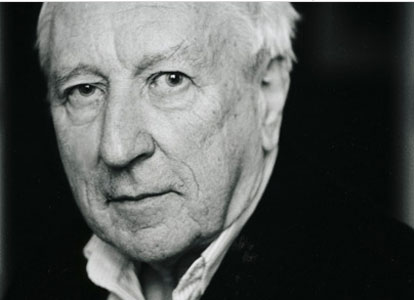
I hadn’t read much of surrealist poet Tomas Tranströmer until recently when a revived interest in Poetry (thank you Blandine Longre and Paul Stubs) had me engaging with my google search bar and my ‘great contemporary poets’ generic feed. I’m glad I read some, because he won the Nobel Prize for Literature today (anyone who seriously thought Bob Dylan had a chance knows nothing of Nobel, Literature, or Bob Dylan) and this is enough of a reason to have a brief peek at some work.
One of the first poems I read by Tranströmer was this one:
THE COUPLE
They turn the light off, and its white globe glows
an instant and then dissolves, like a tablet
in a glass of darkness. Then a rising.
The hotel walls shoot up into heaven’s darkness.
Their movements have grown softer, and they sleep,
but their most secret thoughts begin to meet
like two colors that meet and run together
on the wet paper in a schoolboy’s painting.
It is dark and silent. The city however has come nearer
tonight. With its windows turned off. Houses have come.
They stand packed and waiting very near,
a mob of people with blank faces.
What strikes me at first are the words unspoken. There is something very expansive about this early poem that gave me the impression of literary yoga, as if there were spaces between the congested joints of the clumsy task of articulation. Not to mention the fact of plain beauty. To describe the mingled post-coital thoughts of lovers as they sleep, in the lines ‘but their most secret thoughts begin to meet / like two colors that meet and run together’ is breathtaking in its simple loveliness, the double use of the word ‘meet’ a symbol of the two bodies laying there separate and together.
Then I read this:
AFTER A DEATH
Once there was a shock
that left behind a long, shimmering comet tail.
It keeps us inside. It makes the TV pictures snowy.
It settles in cold drops on the telephone wires.
One can still go slowly on skis in the winter sun
through brush where a few leaves hang on.
They resemble pages torn from old telephone directories.
Names swallowed by the cold.
It is still beautiful to feel the heart beat
but often the shadow seems more real than the body.
The samurai looks insignificant
beside his armour of black dragon scales.
It was reading this poem that I realized something special trembled in my hands. Today we understand we are linked to ourself through our repeated neural pathways, the meandering ‘telephone wires’ of our body that collect our experience, and squash each fresh confrontation with the world into these paths of recognition ‘resembling pages torn from old telephone directories’. A little vibration goes on inside us with each new experience and we see that it is ‘still beautiful to feel the heart beat’ and yet deep inside, ‘often the shadow seems more real than the body.’ That trace of the earliest raw experience, before we recognised it, when It existed only as the shadow of an event yet to be analysed within, gives us a stronger sense of ourselves in the elusive thing we feel we somehow missed.
This depth of recognition of the human condition excited me. I understood the complicated relationship our bodies have with our own memories as interpreter for all that we do. This concept of repeated patterns and their habit of transmutating everything fresh into everything old is a key post-post modern concept beautifully analysed in great contemporary writers such as Tom McCarthy, David Foster Wallace and Zadie Smith.
Inside us is the meandering flood of pathways or ‘telegraph wires’ that form (and in their own way block) our understanding is its own interpretation and reflection of contemporary society as a whole and its use of controlled systems to channel thought and ideas, work and commodity. Everything circles in its endless repetition through the established neural pathways of our societal constructs. Constructs like telegraph wires that leave our own interactions with society like the snowy TV pictures.
In the end, we have been protected and isolated by these systems. We are the fallen Samurai laying small and empty of the enormity of the bursting confrontation with life beside our armoury that in life and death has little chance to change its configuration. Our systems are our armour and they are a collection of black dragon scales.
Then, finally I’ve recently read this:
Further In
On the main road into the city
when the sun is low.
The traffic thickens, crawls.
It is a sluggish dragon glittering.
I am one of the dragon’s scales.
Suddenly the red sun is
right in the middle of the windscreen
streaming in.
I am transparent
and writing becomes visible
inside me
words in invisible ink
which appear
when the paper is held to the fire!
I know I must get far away
straight through the city and then
further until it is time to go out
and walk far in the forest.
Walk in the footprints of the badger.
It gets dark, difficult to see.
In there on the moss lie stones.
One of the stones is precious.
It can change everything
it can make the darkness shine.
It is a switch for the whole country.
Everything depends on it.
Look at it, touch it…
This for me is one of the most beautiful works. This speaks of the depths of language intermingled almost imperceptibly with the systems that carry us through our day in the westernized world. He sits in traffic here, one of the scales on the dragons back. That great dragon carrying all those cars, lives, thoughts, collected mass making up its whole, about their business at the end of the day. It’s the setting sun. I am tired. I have been this scale on the dragons back – crucial yes, but only if I play my prescribed role – all day and I am weary under the strain of obedience.
Then the sun shines through and I see through my skin and remember I am my own words. We are our language. Our ability to communicate is what separates from the animals; from all animals. What is individual is perspective. The light shines through the window pane, and I am my words and my thoughts, the systems that go into the internal description of me to myself and the articulated ‘yawp’ of me to the world.
And suddenly I know I must get far away. I have to go to the forest, follow the badger. The system feeds me and nurtures me, but the price I pay is as heavy as dragon scales, juxtaposed against the potency and lightness of my own words that reveal unique perspective. I am the system, and the system exists also because I am not the system. The system channels me, controls me, releases me and reveals me. I need it to kick against like a teen needs the parent it despises.
I know my words are clumsy. Its 1am and I am excited. Tranströmer won the Nobel Prize 2011 for his ‘condensed translucent images’ which give us ‘fresh access to reality.’ Without being ‘un-hip’ enough to approve of any generic award, I’d like to say I approve of this choice. Here is a poet, fresh and alive with the modern dilemma, making full use of his own neural systems to reveal the history thriving, twisting and writhing within us. he calls to the unique in us. He speaks to multifaceted modes of communication, and he honors the words that give voice to the psyche. Always the words (pathway) and the unspoken breath in between (the shadow of the pathway).
Works can be purchased here.
If you enjoyed this post, please subscribe to this blog and please feel very comfortable to comment. I’d love to hear your perspective.
 Lisa Thatcher
Pingback: The 2011 Nobel Prize in Literature goes to Tomas Tranströmer | Nobel Prize Watch
Mark Wilson, whose book of poetry has come out recently (soon to be reviewed here) and can be purchased here: http://www.lulu.com/product/paperback/quartet-for-the-end-of-time/16796685 made this great comment on my facebook page today:
Transtromer is a fine poet and I can share your enthusiasm to a certain degree, Lisa. Apparently his poetry has more musicality in the original Swedish, but the Engllish versions we have through Fulton, Bly and others are fairly good and stand as good, durable poems in their own right. I would personally have wanted Bei Dao or Geoffrey Hill to have won it but I am not naive enough to know that this will probably never happen. Transtromer’s Swedish nationality probably helped persuade the Nobel panel in Stockholm he was worthy of this honour more than anything. Or perhaps I am being over-cynical? For Transtromer is certainly a better poet than the likes of his lightweight compatriot Martinson who undeservedly won the award a few years back in an excess of jingoism. My scepticism about awards still grows the older I get. One thinks of the greats who did NOT win the Nobel. Ezra Pound was the big miss in my eyes & ears. What an oversight! Still one can’t complain. At least Wendy Cope or Simon Armitage didn’t win it this year!!
LikeLike
I agree with you Mark. The Nobel is Prize is probably the last prize that still has credibility for me, and that is because of who is does NOT award rather than who it does. There are many people for me (particularly women) missing from their list as well, but at least t’s never gone to someone who can obfuscate when they should be going deep.
Haveing said that, I do think there is great room for your cynicsm. I like Tranströmer – but really – for very obscure reasons that I go into in the piece. He fits a style I have a great deal of passion for. I was just last night lamenting surrealism for having so little REAL talent and making a place for poor writers to hide (a little like the beats) and he is an example of a great writer of surrealism and that’s rare. Plus my read is post-post modern and i love that too. Typical of my heritage I don’t know much about the translators. I’ll ahve to check that out too.
LikeLike
Here is the poet reading his own work:
LikeLike